Signs of Bed Bugs UK
Signs of Bed Bugs UK (How to Tell Early)
How Do You Know If You Have Bed Bugs?
Bed bugs are small, excellent at hiding, and often go unnoticed until the infestation becomes serious.
The key to avoiding a major problem is spotting the signs early.
Most people don’t actually see the bugs at first. Instead, they notice small clues—usually on their skin, bedding, or furniture.
If you know what to look for, you can catch an infestation before it spreads.
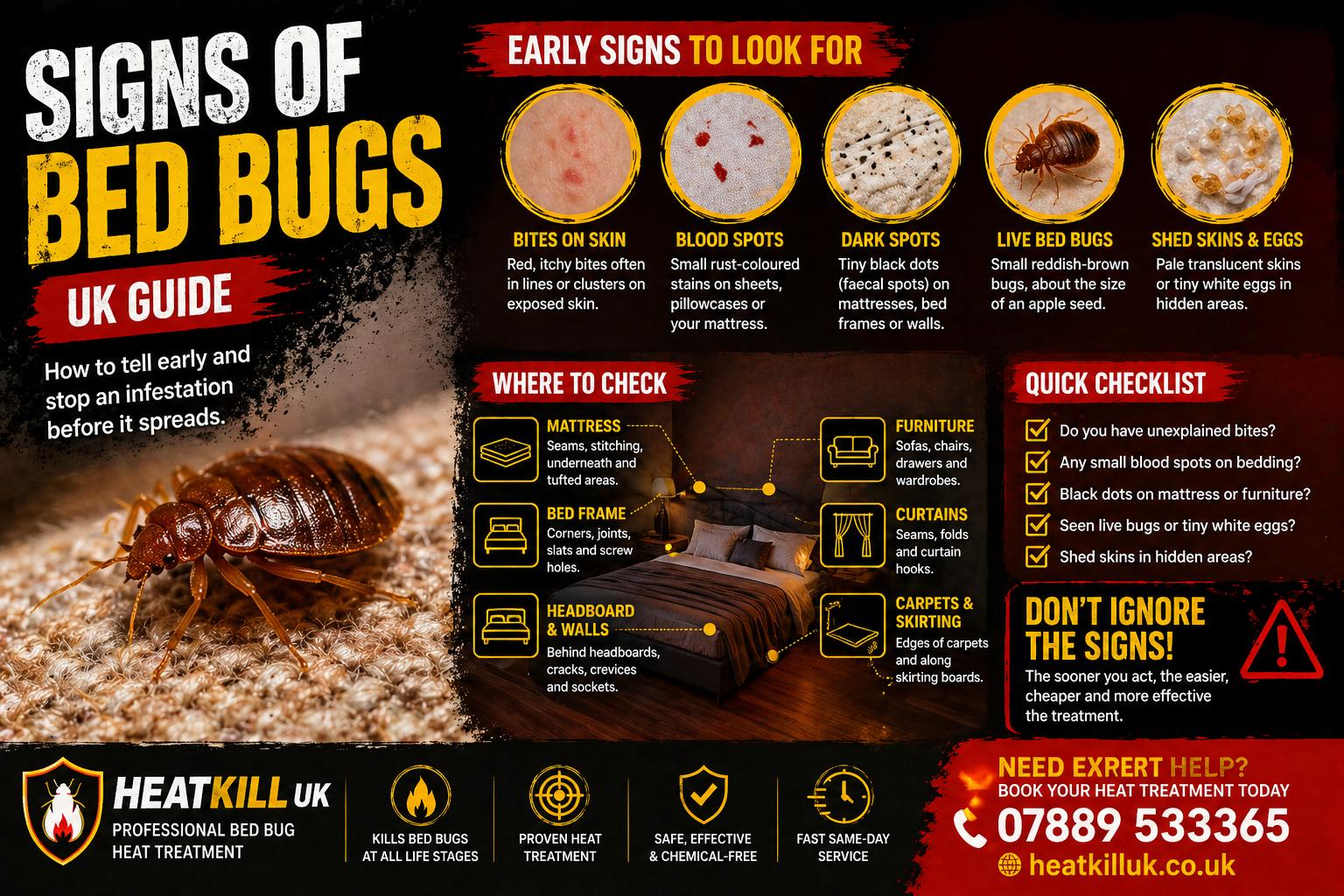
 The Most Common Early Signs of Bed Bugs
Bites on Your Skin
One of the first signs people notice is unexplained bites.
Bed bug bites typically:
- Appear in clusters or lines.
- They are often found on arms, legs, or shoulders.
- Can be itchy or irritated
However, bites alone are not proof. Everyone reacts differently, and some people don’t react at all.
Blood Spots on Bedding
Small blood stains on sheets or pillowcases are another common sign.
These can occur when:
- A bed bug is accidentally crushed during sleep.
- Bites continue to bleed slightly.
They often appear as small rust-coloured marks.
Dark Spots on Mattresses
Bed bugs leave behind waste that looks like tiny black dots.
You may find these:
- Along mattress seams
- On bed frames
- Around headboards
These spots are one of the strongest indicators of an infestation.
Live Bed Bugs
Seeing an actual bed bug confirms the problem—but this usually happens later.
Adult bed bugs are:
- Small and oval-shaped
- Reddish-brown in colour
- About the size of an apple seed
They tend to hide during the day and come out at night.
Shed Skins and Eggs
As bed bugs grow, they shed their outer skin.
You might notice:
- Pale, shell-like skins
- Tiny white eggs (often in clusters)
These are usually found in hidden areas.
 Where to Check for Bed Bugs
Bed bugs don’t just live in beds—they hide wherever they can stay close to a host.
Mattress and Bed Frame
Start here first:
- Seams and stitching
- Under the mattress
- Around the bed frame
Headboard and Wall Areas
Check:
- Behind headboards
- Cracks in walls
- Around plug sockets
Furniture
Bed bugs can spread beyond the bed.
Look at:
- Sofas and chairs
- Drawers and wardrobes
- Bedside tables
Curtains and Carpets
In more advanced cases, bed bugs may be found:
- Along the curtain seams
- Around carpet edges
- Near skirting boards
 Why Bed Bugs Are Hard to Detect Early
Bed bugs are designed to stay hidden.
They:
- Avoid light
- Hide in tiny gaps
- Feed at night
In the early stages, there may be only a small number present, making them difficult to spot.
By the time you see them regularly, the infestation is often more established.
 Common Mistakes People Make
Assuming It’s Just Mosquitoes or Fleas
Many people ignore early signs, thinking the bites are harmless.
This delay allows the infestation to grow.
Only Checking the Mattress
Bed bugs don’t stay in one place.
If you only check the mattress, you may miss the bigger picture.
Waiting Too Long
The longer you wait, the more the infestation spreads.
What starts in one room can quickly move to others.
 How Bed Bugs Get Into Your Home
Understanding how they arrive helps you spot the problem earlier.
Common sources include:
- Travel (hotels, luggage)
- Public transport
- Second-hand furniture
- Visitors or neighbouring properties
Bed bugs are not related to cleanliness—they can affect any home.
 How Quickly Do Bed Bugs Spread?
Faster than most people expect.
A small infestation can grow rapidly because:
- Bed bugs reproduce quickly.
- Eggs hatch within days.
- They spread through movement and contact.
Catching them early is critical.
 Bed Bugs vs Other Pests
It’s easy to confuse bed bugs with other insects.
Bed Bugs vs Fleas
- Fleas tend to bite around the ankles.
- Bed bugs often bite the upper body.
- Fleas jump—bed bugs crawl.
Bed Bugs vs Dust Mites
- Dust mites are microscopic.
- They don’t bite in visible patterns.
- Bed bugs leave clear physical signs.
 When Should You Take Action?
You should act immediately if you notice:
- Multiple signs at once
- Repeated bites over several days
- Dark spotting on bedding or furniture
- Live bed bugs
Even one confirmed sighting is enough to take seriously.
 What To Do If You Suspect Bed Bugs
Do Not Panic
Bed bugs are stressful—but manageable with the right approach.
Avoid DIY Overuse
Sprays and home remedies often:
- Miss hidden areas
- Fail to kill eggs
- Make the problem worse.
Get Professional Advice Early
Early intervention:
- Reduces cost
- Prevents spread
- Increases success rates
 Why Early Detection Matters
The earlier you act:
- The easier the treatment
- The lower the cost
- The less disruption to your home
Waiting allows the infestation to become harder to control.
Book Professional Bed Bug Treatment
If you’ve noticed any of these signs, it’s best to act quickly.
HeatKill UK provides fast, effective bed bug heat treatment designed to eliminate infestations in a single visit.
Frequently Asked Questions
Can you have bed bugs without seeing them?
Yes. In the early stages, signs like bites or marks appear before the bugs are visible.
Are bed bugs easy to spot?
Not always. They hide well and are usually only seen once the infestation grows.
Do bed bugs only live in beds?
No. They can spread to furniture, walls, and other areas close to where people sleep.
Are bed bugs caused by poor hygiene?
No. Bed bugs can affect any home regardless of cleanliness.